Daily Habits
How Much Water Should You Be Drinking Daily?
The 'eight glasses a day' rule is a myth. Hydration is highly personal and depends on your activity level, climate, and body composition. We break down the science of hydration to help you find your unique 'goldilocks' zone for water intake in the Indian climate.
Beyond the Eight-Glass Myth
We have all heard the advice to drink eight glasses of water a day. While it’s a helpful starting point, it isn't based on rigorous science. The human body is incredibly adaptable, and your water requirements can change day-to-day. Factors like the humidity in Mumbai versus the dry heat of Delhi drastically alter how much fluid you lose through perspiration.
Water accounts for about 60% of your body weight and is involved in every bodily function. It regulates temperature, lubricates joints, protects sensitive tissues, and helps eliminate waste. Failing to keep up with these fluid losses can lead to a decline in both physical and cognitive performance.
Calculating Your Personalized Needs
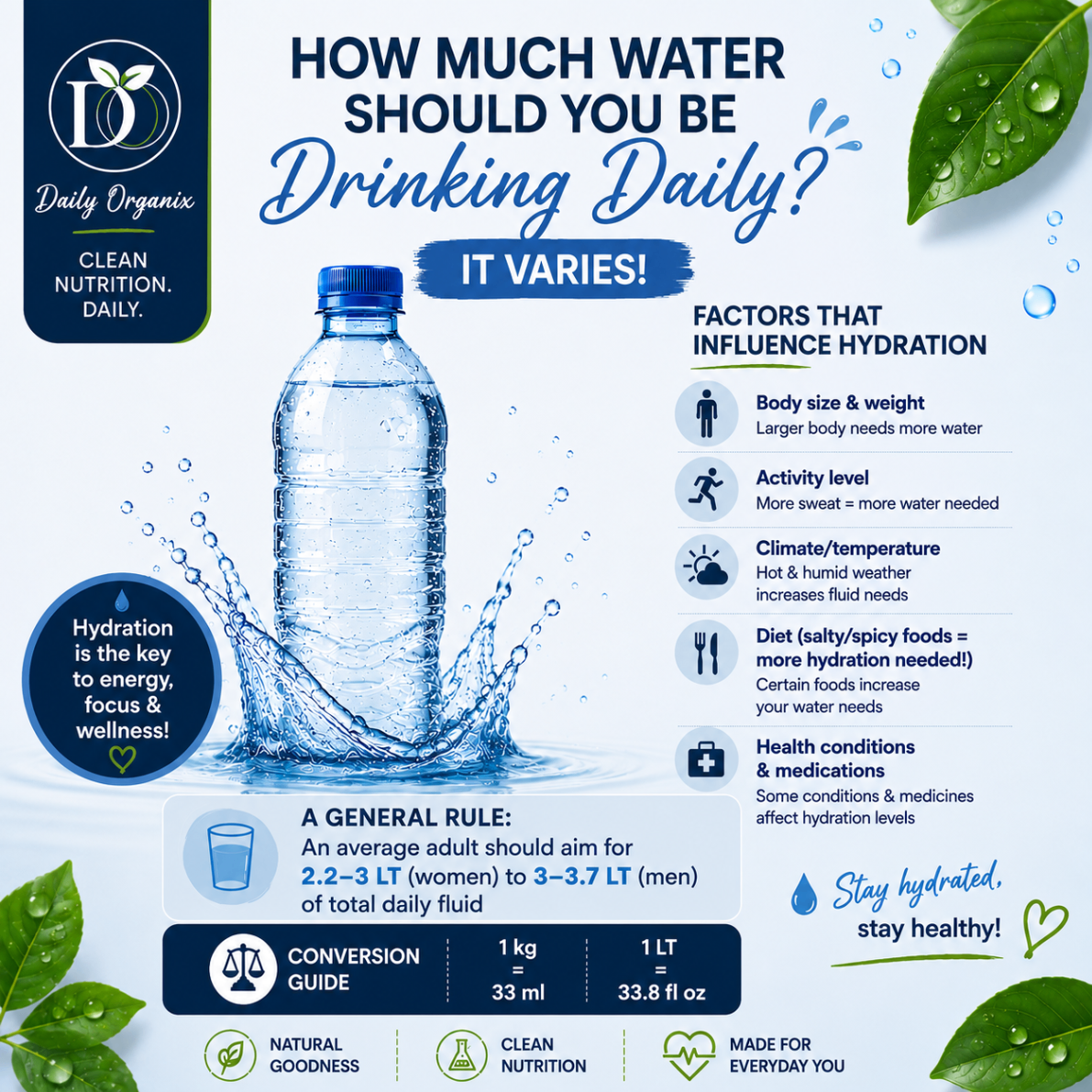
A better way to estimate your needs is based on your body weight. A general recommendation is roughly 30-35ml of water per kilogram of body weight. For example, a person weighing 70kg would need approximately 2.1 to 2.4 liters of total fluid daily. This includes water from foods like soups, fruits, and vegetables.
However, if you are active or living in a hot environment—standard for much of India—you may need to add 500ml to 1000ml to that baseline. Your body uses water to cool down, and in high heat, you can lose substantial amounts of fluid through sweat even if you aren't doing vigorous exercise.
Recognizing Subtle Dehydration
Dehydration doesn't always show up as extreme thirst. Often, the first signs are far more subtle: a slight headache, a dip in concentration, or feeling unusually tired in the afternoon. Many people reach for a snack when they are actually thirsty, as the brain can sometimes confuse the two signals.
Monitoring your urine color is one of the easiest ways to check your status. Pale straw color indicates good hydration. If it’s dark yellow or amber, it’s a clear signal from your body that you need to drink up. Paying attention to these cues allows you to stay ahead of dehydration before it impacts your mood and energy.
Hydration Through Food
About 20% of our daily fluid intake comes from the foods we eat. Many fruits and vegetables are over 90% water. Watermelon, cucumbers, tomatoes, and oranges are excellent choices for boosting hydration levels while also providing essential vitamins and minerals. In the Indian diet, refreshing drinks like coconut water or buttermilk (chaas) provide electrolytes alongside hydration.
Integrating these hydrating foods into your meals can make meeting your daily goals much easier. They provide 'structured water' along with fiber, which helps the body absorb the fluid more slowly, providing a steadier state of hydration compared to chugging large amounts of plain water occasionally.
Setting a Sustainable Routine
Consistency is the key to proper hydration. Drinking three liters of water in one sitting isn't as effective as sipping throughout the day. The kidneys can only process a certain amount of water at a time; the rest is simply excreted. Creating 'anchor habits'—like drinking a glass of water after Every bathroom break or before every meal—can automate your hydration.
Investment in a high-quality, BPA-free water bottle can also serve as a visual reminder. When water is visible and accessible, you are significantly more likely to drink it. Start small, track your progress, and listen to your body’s unique requirements for a healthier, more energized version of yourself.
Key takeaways
- Hydration needs vary based on weight, climate, and activity level.
- Thirst is a late-stage indicator; aim to drink before you feel thirsty.
- Fruits and vegetables contribute significantly to your daily water intake.
- Urine color is the most reliable practical indicator of hydration status.
Wellness tips
Tip 1
Carry a reusable 1-liter bottle to track your progress easily.
Tip 2
Start your day with a full glass of water before your tea or coffee.
Tip 3
Add cucumber or mint to make plain water more palatable.
Tip 4
Increase intake during peak heat hours (12 PM to 4 PM) in India.
FAQ
Support Your Wellness Journey
Optimize Your Daily Wellness
Hydration is the foundation. Support your body's efficiency with our essential nutrients.